Friday, September 6, 2019

Watch Out! Prostate Problems Will Occur Someday! Part 1 of 3

Do you know your risk for developing benign prostatic hyperplasia (BPH)? You should read carefully and share this article.
Let’s look at following graphic first. 
More than half of men over the age of 50 have benign prostatic hyperplasia. However, it turns out that around 8% of men between the of age 30 and also have this condition, and if they live over the age of 80, up to 80% of them may have trouble with benign prostatic hyperplasia. Don't think that this issue is irrelevant to you. According to this graphic, it is statistically and highly likely that you may have this problem someday if you are male.
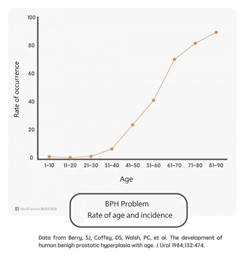
BPH problem rate of age and incidence
In 2011, a European study surveyed 1,161 patients with benign prostatic hyperplasia. They found that these patients put off seeing a doctor for 23 months on average after experiencing BPH symptoms. Research in Asia also indicated that 76% of men believe that benign prostatic hyperplasia (patients with a velocity of urine stream less than 15 ml/s) will not affect their lives. Many elderly men don’t understand it or perhaps are too shy to see a doctor. Please continue to read more and you will understand why the idea that ‘’Benign prostatic hyperplasia won’t affect my life’’ is not totally true.the structure of prostate
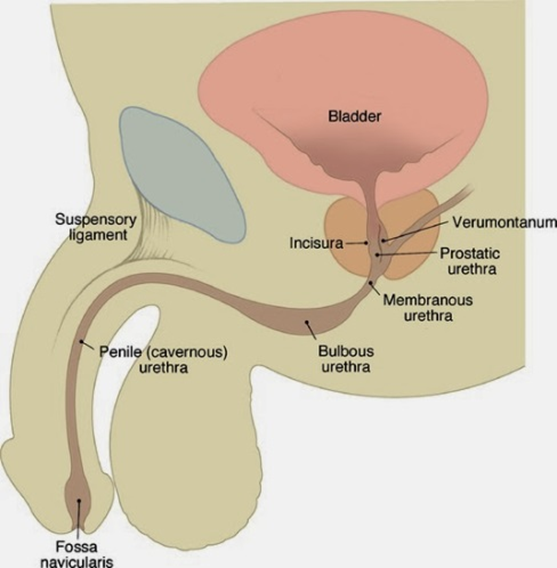
Causes, Symptoms and Screening of Prostate Hypertrophy
The prostate is a gland that surrounds the upper part of the urethra and secretes prostatic fluid. It injects fluids into the urethra during ejaculation and mixes with sperm and secretions from the seminal vesicle to become semen.
With age, the prostate may enlarge, which means the number of cells in the prostate increase gradually. It sounds horrible because cancer also happens this way. However, don’t forget the “B” in BPH stands for benign. As long as you follow your doctor's instructions, you do not have to worry too much. Up to present, the mechanism of action for prostate hypertrophy is not clear, but there are some relevant factors, such as genes, age, androgens, inflammation, obesity, and increase of waistline. As you can see, not all of these factors can be controlled or prevented. In fact, managing weight is probably the only one we can have some control of. The normal prostate is about 20 grams, but the prostate of a patient with BPH can grow twice as big in size, sometimes even bigger.normal prostate compare with (benign prostatic hyperplasia)
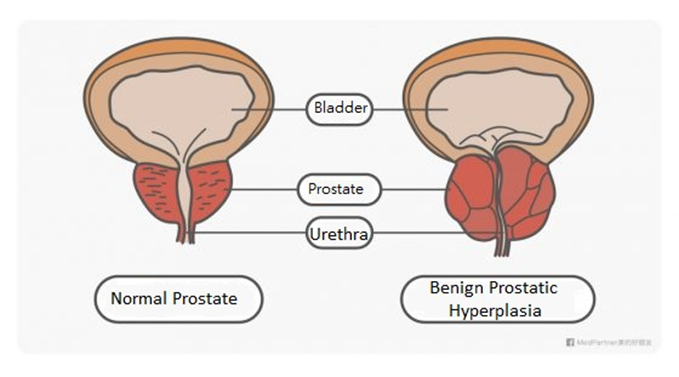
                     BPH
Let's look at the prostate from a different angle. Because of its position, once the prostate grows it does not affect sexual activity for men, but it will cause many urethra-related symptoms. That is because of the compression of the bladder and urethra. These symptoms can be divided into two conditions: storage and expulsion of urine.

The reason is simple: a hypertrophic prostate narrows the urethra and produces urinary expulsion symptoms. For example, standing up for longer periods to urinate, interrupted urination, urinating for a long time, slow urination, frequent urination and other conditions. If the prostate presses upward on the bladder, symptoms of urinary storage will occur, like frequent urination, acute urination, nocturnal urination, or even worse, acute urinary incontinence. Urinary symptoms may also lead to urethra infections. Urinary storage symptoms often lead to a decline in quality of life. If you have to pee five times a night or even accidentally experience incontinence outside of the restroom, that can be a nightmare.

You can see the effects of BPH when you go to a public restroom (but keep a low profile or you’ll look like a pervert). Young men go to the urinal, splash, zip, and leave,  but elder men often stand for a long time without urinating. In addition, when they finally do it, urine drips down to their shoes.
The prevalence of benign prostatic hyperplasia is high, so there is an international questionnaire to find out if you have benign prostatic hyperplasia or not.

Come back next week, we will tell you the way to inspect if you have benign prostatic hyperplasia or not. See you then.

Thursday, September 5, 2019

SunJour Healthcare News: Golden Biotechnology Corporation Will Change Cancer Treatment in the Near Future


It is currently impossible to immediately cure any type of cancer. Chemotherapy drugs such as Taxol and Gemcitabine are highly effective in killing cancer cells, but because of their drug resistance and strong side effects, they can only be used for short-term treatment. This is the basis for the first line of medication. Drugs for targeted therapy can be used to treat specific tumors, but they still produce drug resistance. There is no anti-cancer drug on the market that can treat respiratory diseases and metabolic syndromes at the same time, so the current treatments against lung cancer have all failed in the end. It is also important to maintain the efficacy of the respiratory system and treat metabolic syndromes. This issue is also of concern for the US FDA. 
Cancer patients who have many diseases are common worldwide. Therefore, it is extremely important that the drug used to fight cancer has a broad spectrum so that the patient has a chance to recover. Finding a basic drug that not only has the effect of inhibiting cancer but also has no side effects is the most urgent goal at present.

Golden Biotechnology Antroquinonol®
A. [Concurrent therapy]:
Maximize the therapeutic effect of chemotherapy drugs. After 4 to 8 cycles, drug resistance disappeared. Supporting the immune system and uninterrupted treatment allowed chemotherapy to achieve the desired results of continuous treatment.
B. [Intermittent treatment]:
Only use Antroquinonol® for therapy when the patient cannot tolerate chemo and when time permits, the patient can re-attempt chemo. Antroquinonol® can be used as an add-on adjuvant therapy.
Purpose:
1. Maintaining the patient's quality of life (QoL) without the need to interrupt chemotherapy or develop resistance and deterioration.
2. Chemotherapy intervention is conducive to short-term results of the poisoning of solid tumors.
3. Maintaining results and repairing damage to organ function, such as liver, kidney and cardiovascular inflammation so that damage and inflammation can be alleviated.
Antroquinonol® will surely become “the standard of the SOC (standard of care).”


Wednesday, September 4, 2019

SunJour Healthcare Supports Prostate Health Awareness, September 2019

September is a big month for men and men’s health, and 2019 is no different. 
Are you or someone you know reluctant to get prostate health support? We at SunJour Healthcare want to tell you that it’s time to remove the stigma of going to the urologist or talking to someone you trust. In order to encourage men to get their prostate checked, some clinics and health fairs have resources to provide prostate care (some for free) this month. You may have concerns about screening so it is best to speak with your urologist or get a second opinion if you are still uncertain. Educating oneself on the topic is important, and be sure to ascertain that the sources you are looking at are providing accurate information and avoid harmful misinformation. Men have different treatments that worked or didn’t work for them, so it’s important to see the side effect profiles of any treatment options if you are diagnosed with a prostatic condition or disease.
Support groups are a great contributor to holistic treatment of men's health and even for preventative care. Although there’s the old stereotype that men don’t talk about their feelings, it can be very beneficial to talk about your fears, hopes, accomplishments, unpleasant episodes or pain points. You may be able to dismantle some preconceived notions when surrounded by positive people. You can find communities online and offline for men’s health support. Like a pair of shoes, it’s not guaranteed that one group will fit, but rather than go barefoot and be alone, try another group where you may feel more comfortable. 

Know that it’s not always going to be as serious as going on medication or undergoing surgery, because it depends on how mild or severe the symptoms are. What you should note, though, is that a positive change in lifestyle and natural options can be viable forms of complimentary treatment when there is enough scientific evidence. Your friends might even give you recommendations from word of mouth, but as with everything, instead of impulsively jumping to your shopping cart, give yourself the knowledge about the steps you take and weigh the pros and cons.
We hope you can join in on the conversation about raising awareness about the prostate in 2019. What steps will you take to spread awareness for yourself and others?

Thursday, May 31, 2018

Un 50% de los hombres mayores de 65 padecen de la hiperplasia benigna prostática (HBP). ¿Cómo reducir los síntomas utilizando un suplemento alimenticio compuesto de soya y del astrágalo?


La hiperplasia benigna prostática (HBP) se manifiesta con un agrandamiento de la próstata y su prevalencia se vuelve mayor a medida que los hombres se hacen mayores. Tanto así, que los estudios han determinado que la mitad de quienes superan los 65 años padecen de este mal.

Afortunadamente esta afección no tiene consecuencias cancerosas; sin embargo, sí puede llegar a disminuir la calidad de vida de aquellos hombres que tienen próstata agrandada. En algunos casos, los síntomas no se manifiestan, pero en otros pacientes se convierten en motivo de cirugía urgente.

Existe la posibilidad de reducir los síntomas de la HBP utilizando un suplemento alimenticio compuesto de soya y astrágalo, dos plantas reconocidas por sus beneficios para la próstata y la salud en general.

El agradamiento de la próstata
La hiperplasia benigna prostática se caracteriza por ser una patología que va de la mano con el desarrollo natural del género masculino. En otras palabras, el tamaño de la próstata aumenta con la edad. Las cifras indican que menos del 10 por ciento de los hombres sufre esta condición; sin embargo, el panorama comienza a cambiar después de los 40 años.

De acuerdo con las investigaciones, un 50 % de los hombres mayores de 65 años padece de HBP, mientras que la cifra sube a 90 % cuando se alcanzan los 85 años. Además de la prevalencia también aumenta la intensidad de los problemas.

Se conocen casos de pacientes con próstata agrandada que no manifiestan ningún síntoma. En el extremo opuesto están quienes sí notan los problemas de la enfermedad; algunos con síntomas suaves y otros con dificultades bastante incómodas y dolorosas.

Dentro de las señales más comunes de HBP se observan: problemas para orinar, flujo débil de orina, micción frecuente, nicturia (ganas de orinar durante la noche), sensación de vejiga llena luego de orinar y goteo constante, entre otras. Estos problemas se convierten en un verdadero malestar porque los pacientes no pueden llevar una vida normal.

Un suplemento alimenticio favorable
La próstata agrandada hace que los hombres corran el riesgo de desarrollar infecciones del tracto urinario o de necesitar cirugía porque la orina no logra fluir. Una vez que el médico detecta la enfermedad a través de las pruebas especializadas, podrá asignar un tratamiento que mejore la HPB.

Los métodos de control varían de acuerdo con la intensidad de los síntomas. Mientras que algunos pueden superarlos cambiando sus hábitos diarios y tomando medicamentos, otros necesitarán procedimientos no invasivos o intervenciones quirúrgicas.

Sin importar el tratamiento asignado, existe un suplemento alimenticio compuesto por soya y astrágalo que sirve efectivamente como terapia complementaria. Se llama UMOOZE y puede reducir los síntomas de la hiperplasia benigna prostática en hombres mayores de 65 años o de cualquier edad.

La soya es un alimento que se consume con bastante frecuencia y se utiliza en la fabricación de diversos productos, debido a todas las propiedades nutritivas y beneficios en la salud. El estrágalo también se ha utilizado con éxito durante siglos para promover la salud inmunológica y es efectivo en la prevención de varias enfermedades.

El UMOOZE combina extractos de soya y astrágalo para convertirse en un suplemento natural que protege con firmeza la próstata y reduce los síntomas relacionados con una glándula prostática agrandada.

Consumir dos tabletas diarias de este compuesto será un excelente aporte para los hombres que quieren mejorar su calidad de vida. Se olvidarán de los problemas a la hora de orinar y de la necesidad constante de ir al baño, además de las otras dificultades relacionas con la hiperplasia benigna prostática.

50% of men over the age of 65 have benign prostatic hyperplasia (BPH). How can a dietary supplement containing soy and astragalus reduce the symptoms?

Benign prostatic hyperplasia (BPH) manifests itself as an enlargement of the prostate and its prevalence is in older men. In fact it’s so prevalent that studies have determined that half of men over 65 have this condition.
Fortunately this affliction is not linked to cancer. However, men with enlarged prostates may experience a reduced quality of life. In some cases, symptoms do not appear, but in other patients it becomes a reason to have emergency surgery.
It is possible to reduce the symptoms of BPH using a dietary supplement made of soy and astragalus, two plants recognized for their benefits to the prostate and general health.
Prostate enlargement
Benign prostatic hyperplasia is characterized as a pathology that deviates from the natural development of males. In this case of this condition, the size of the prostate increases with age. Statistics indicate that less than 10 percent of the male population has this condition. However, this statistic changes after the age of 40.
According to research, 50% of men over 65 have BPH, while the rate increases to 90% when a man reaches 85 years of age. In addition to its prevalence the intensity of problematic symptoms also increases.
There have been patients with prostate enlargement who don’t experience any symptoms. On the other end of the spectrum, there are those who experiences problems with the condition; some symptoms may be mild while others are very uncomfortable and painful.
Among the most common signs of BPH are the following: problems urinating, weak urinary flow, frequent urination, nocturia (urge to urinate at night), the sensation of having a full bladder despite having emptied and constant dribble, among others. These problems become a real bother because patients are unable to live a normal life.
A favorable dietary supplement
An enlarged prostate causes men to run the risk of developing infections in the urinary tract or may even necessitate surgery because urine becomes unable to flow. Once a urologist detects this condition via specialized tests, they may assign a treatment to improve BPH.
The control methods vary depending on the intensity of symptoms. While come can overcome BPH by changing their daily habits and taking medication, others need non-invasive procedures or surgical intervention.
Regardless of what treatment a patient is given, there is a dietary supplement made from soy and astragalus which effectively serves as an add-on therapy. It’s called UMOOZE and it can help reduce the symptoms of BPH in men over 65 or of any age.
Soy is a food that is consumed often and is used in the manufacture of various edible products due to its nutritional properties and health benefits. Astragalus has also been used successfully for many centuries to promote immune health and is effective in the prevention of various diseases.
UMOOZE combines extracts of soy and astragalus to make them into a natural supplement that strongly protects the prostate and reduces symptoms associated with an enlarged prostate gland.
Taking two tablets a day of this supplement may serve as an excellent support for men to improve their quality of life. Men can forget about having problems when it comes time to urinate and will no longer have to worry about the constant need to go to the bathroom, in addition to other difficulties related to benign prostatic hyperplasia. 

Estas dos hierbas medicinales podrían mejorar los síntomas causados por la inflamación de la próstata: el astrágalo y la soya


La inflamación de la próstata debido a la hiperplasia benigna prostática ocurre generalmente en hombres mayores de 40 años y su intensidad va aumentando con el paso del tiempo. En muchos casos deteriora la calidad de vida, pues los síntomas pueden variar desde leves hasta más fuertes y el tratamiento incluye medicamentos, terapias no invasivas o cirugía.

Los problemas más comunes de una próstata inflamada tienen que ver con la necesidad urgente y muy frecuente de ir al baño, incluso durante toda la noche, además de dificultades para orinar, dolor, goteo constante y flujo débil, entre otros.

Se ha descubierto que el astrágalo y la soya son dos hierbas medicinales que podrían mejorar notablemente los síntomas causados por la inflamación de la próstata. ¿Qué vuelve especiales a estas plantas en el tratamiento de dichos problema? Sigue leyendo para que lo conozcas.

Astrágalo, una hierba milenaria
El astrágalo (Astragalus membranaceus) se utiliza en la medicina herbal desde hace más de 4.000 años por sus propiedades tónicas y antipatógenas. Es un arbusto espinoso originario de China con un sabor dulce que se ha vuelto común en la preparación de tónicos y productos destinados al cuidado del corazón, los pulmones y el bazo.

En la actualidad se recomienda como un elemento natural que ayuda al cuerpo a soportar situaciones estresantes, además en el control de problemas de inmunidad, fatiga y la salud en general porque refuerza el metabolismo y mejora el sistema inmunológico.

Sus beneficios se deben a tres componentes esenciales:

1) Saponinas, se encuentran en la raíz y tienen efectos diuréticos, antiinflamatorios y antihipertensivos.
2) Flavonoides, usados por sus características antioxidantes, ya que eliminan los radicales libres, además de que previenen enfermedades cardíacas, cáncer y virus de inmunodeficiencia.
3) Polisacáridos, que modulan el sistema inmune y sirve como antioxidante, antitumoral, antidiabético, antiviral, hepatoprotector y antiinflamatorio.

Junto con la soya, el astrágalo tiene gran eficiencia para aliviar los síntomas causados por los problemas en la próstata. Asimismo, potencia el sistema inmune y lo protege de los virus, ayuda contra la inflamación, ejerce una acción antioxidante, mejora el soporte renal, tiene efectos antienvejecimiento y alivia los males en pacientes sometidos a quimioterapia, entre otros.

Soya, un alimento vitamínico
La soya (Glycine max) es, por otra parte, un alimento de gran importancia que se originó en Asia. Se consume en forma de frijol y contiene cantidades significativas de vitaminas, minerales dietéticos y ácido fítico. Se ha convertido en un sustituto de la carne, gracias a las proteínas que aporta, además de carbohidratos, vitaminas y minerales.

Está compuesta por una cantidad saludable de elementos saludables, dentro de los que se pueden mencionar:

-       Isoflavonas (genisteína, daidzeína y gliciteína), conocidas comúnmente como fitoestrógenos, que muestran un apoyo en el tratamiento de cáncer de próstata y seno.
-       Fosfolípidos, son unos aceites que contribuyen a optimizar la estructura de la membrana celular.
-       Saponinas, unas sustancias investigadas por proporcionar diversos efectos biológicos, como anticancerígenos, antiinflamatorios, antioxidantes y hepatoprotectores, entre otros.
-       Ferritina, una proteína que favorece el almacenamiento de hierro para combatir la anemia.

Junto con el astrágalo, la soya ejerce un importante papel mejorando los síntomas causados por la inflamación de la próstata, tales como corriente urinaria débil, sensación de vejiga llena incluso después de orinar, necesidad frecuente de ir al baño a cualquier hora y dificultad para comenzar a orinar, entre otros.

Asimismo se ha demostrado que la soya puede aliviar los síntomas de la menopausia, aumentar la actividad metabólica, prevenir la osteoporosis, reducir los niveles de colesterol y curar trastornos del sueño.

These two medicinal herbs could improve symptoms caused by prostate inflammation: astragalus and soy


Inflammation of the prostate caused by benign prostatic hyperplasia generally occurs in men over 40 and its severity increases over time. In many cases quality of life is compromised, as the symptoms may range from mild to severe and treatment includes medication, non-invasive therapies or surgery.
The most common problems with an inflamed prostate have to do with the urgent and frequent need to go to the bathroom, especially at night, in addition to difficulty urinating, pain, constant dribble and weak flow, among others.
It has been discovered that astragalus and soy are two medicinal herbs that could significantly improve symptoms caused by inflammation of the prostate. What makes these plants special in the treatment against such problems? Keep reading to learn more.
Astragalus, an ancient herb
Astragalus (Astragalus membranaceus) has been used in herbal medicine for over 4,000 years for its tonic and anti-pathogenic properties. It is a thorny plant originally from China with a sweet flavor that is commonly used when preparing tonics and products aimed at heart, lung and spleen health.
Currently it is recommended as a natural element to support the body against stressors, in addition to controlling problems with immunity, fatigue and general health because it reinforces metabolism and improves the immune system.
Its benefits are thanks to three essential components:
1)      Saponins, which are found at the root and have diuretic, anti-inflammatory and anti-hypertensive effects.
2)      Flavonoids, used for their antioxidant properties which eliminate free radicals in addition to preventing cardiac diseases, cancer and immunodeficiency viruses.
3)      Polysaccharides which modulate the immune system and are antioxidant, anti-tumor, anti-diabetic, antiviral, hepatoprotective and anti-inflammatory.
Along with soy, astragalus exhibits great efficacy in the relief of symptoms caused by prostate problems. At the same time, it strengthens the immune system and protects it from viruses, helps control inflammation, exercises antioxidant action, supports renal health, exhibits anti-aging effects and alleviates side-effects from chemotherapy, among other benefits.
Soy, a nutritious food
Soy (Glycine max) is, on the other hand, a food of great importance originally from Asia. It is consumed as a bean and contains significant amounts of vitamins, dietary minerals and phytic acid. It has become a substitute for meat thanks to its protein content, in addition to carbohydrates, vitamins and minerals.
It contains a healthy amount of healthy elements, among them the following:
-          Isoflavones (Genistein, daidzein and glycitein), known commonly as phytoestrogens, which demonstrate support in the treatment against prostate and breast cancers.
-          Phospholipids, oils that contribute to optimize the structure of the cell membrane.
-          Saponins, substances often researched for their biological properties of being anti-carcinogenic, anti-inflammatory, antioxidant and Hepatoprotective, among others.
-          Ferritin, a protein that stores iron to help combat anemia.
Along with astragalus, soy exercises an important role in improving symptoms caused by inflammation of the prostate, such as weak urinary flow, the sensation that the bladder is full after emptying, the need to go to the bathroom frequently at all hours and difficulty to start urinating, among others.
At the same time it has been shown that soy can alleviate the symptoms of menopause, enhance metabolic activity, prevent osteoporosis, reduce cholesterol levels and cure sleep problems.